THE EXERCISE IS BEING USED TO IDENTIFY VULNERABILITIES, ADDRESS DEFICIENCIES, ETC...
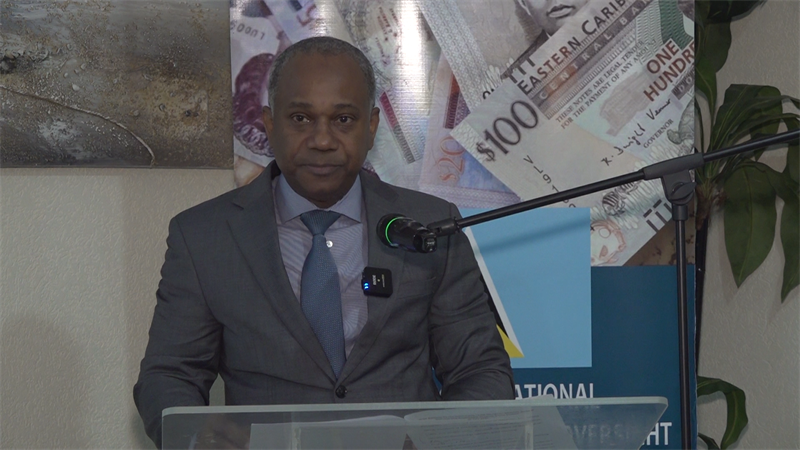 Saint Lucia is strengthening its national framework to combat money laundering, terrorist financing and proliferation financing, as officials review the findings of the 2025 National Risk Assessment. The exercise is being used to identify vulnerabilities, address deficiencies and prepare the country for the fifth-round mutual evaluation by the Caribbean Financial Action Task Force (CFATF).
The Government of Saint Lucia, through the National Anti-Money Laundering Oversight Committee (NAMLOC), recently convened stakeholders to examine the findings of the 2025 National Risk Assessment, which provides an evidence-based examination of the country's exposure to money laundering, terrorist financing and proliferation financing risks.
The assessment identifies key vulnerabilities requiring further action, while highlighting opportunities to strengthen national safeguards and improve the country's ability to respond effectively to financial crime risks.
Permanent Secretary in the Attorney General's Chambers and Chair of NAMLOC, Juliana Alfred, said the report provides an important foundation for evidence-based decision-making and the development of effective action plans.
"The report will highlight, of course, the risks that we face currently, the vulnerabilities that we have to address, and the opportunities that exist for us to build stronger safeguards. By us identifying our challenges, it allows us now to be able to make decisive decisions, set effective action plans, which will be guided on the basis of the evidence that we have collected."
Alfred emphasized that the National Risk Assessment represents the culmination of extensive work involving government agencies, private-sector stakeholders, NAMLOC members and its various subcommittees.
She urged stakeholders to view the findings as a practical tool for strengthening Saint Lucia's national response to financial crime.
"We want you to embrace this report as a tool. A tool for action. A tool that will allow us to prepare as we get ready for the fifth round, 2027–2028. It provides us an opportunity to work on the deficiencies that we have highlighted in the report, and to build on the work as well that the country has undertaken over the last few years."
The 2025 National Risk Assessment builds on previous efforts by NAMLOC to strengthen Saint Lucia's anti-money laundering and counter-financing framework. The country has also undertaken targeted initiatives, including a trade-based money laundering risk assessment workshop, aimed at deepening the understanding of emerging financial crime risks and strengthening measures to mitigate them.
Attorney General Leslie Mondesir said the latest assessment must provide a credible, accurate and evidence-based picture of Saint Lucia's risk environment.
"Our objective is not to secure the most favorable ratings, but to ensure that the conclusions are accurate, evidence-based, and truly reflective of our risk environment. Where the evidence supports a conclusion, it must be clearly articulated. Where gaps, inconsistencies, or uncertainties exist, they must be identified and addressed."
Mondesir said the assessment will help guide policy decisions, support the effective allocation of resources and strengthen national measures to protect the integrity of the country's financial system.
He noted that the exercise is particularly significant as Saint Lucia prepares for the fifth-round mutual evaluation, which will examine not only the existence of laws and institutional frameworks, but also the country's ability to understand its risks and demonstrate that those risks are being effectively mitigated.
"The credibility of the final report will depend on the quality of the contributions made by the agencies and sectors represented here today. This exercise is particularly significant as we prepare for Saint Lucia's fifth round mutual evaluation. The FATF methodology emphasizes not only the existence of laws and institutional frameworks, but also the country's ability to understand its risks and demonstrate that those risks are being effectively mitigated."
The findings of the National Risk Assessment are expected to support the development of targeted action plans, strengthen identified areas of vulnerability and help agencies address outstanding deficiencies ahead of the 2027–2028 evaluation period.
NAMLOC continues to emphasize that the effectiveness of Saint Lucia's anti-money laundering and counter-financing framework depends on sustained collaboration among government agencies, regulators, law enforcement authorities and private-sector stakeholders.
As the country advances preparations for the fifth-round mutual evaluation, the National Risk Assessment is expected to serve as an important tool for strengthening national resilience against financial crime and ensuring that Saint Lucia's systems are supported not only by sound laws and policies, but also by effective implementation.
- END -